education
-
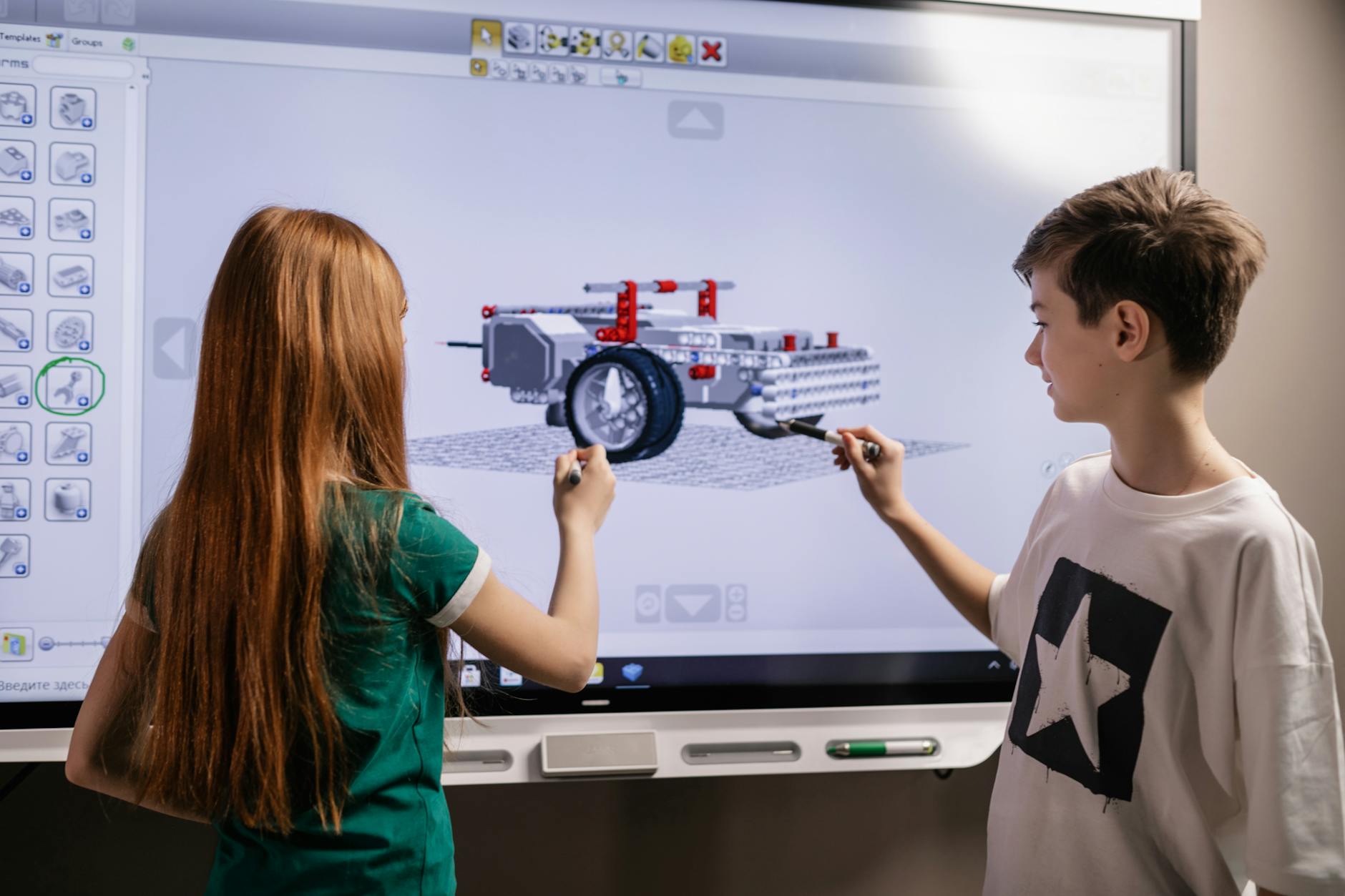
A small robot ran around the field, turning back and forth and then swiftly from left to right, picking up triballs, a ball in the shape of a triangle, and moving them into a net goal zone, then climbing a pole and lifting itself vertically off the field. Amazingly, it was all done in less…
-
You’ll often see us talking about how great the tech industry is (naturally), and we truly believe it is. It’s a place where we see all kinds of people build the careers of their dreams, no matter their background, socio-economic status, demographic, or even personality type. However, we would be remiss to discuss the state…
-
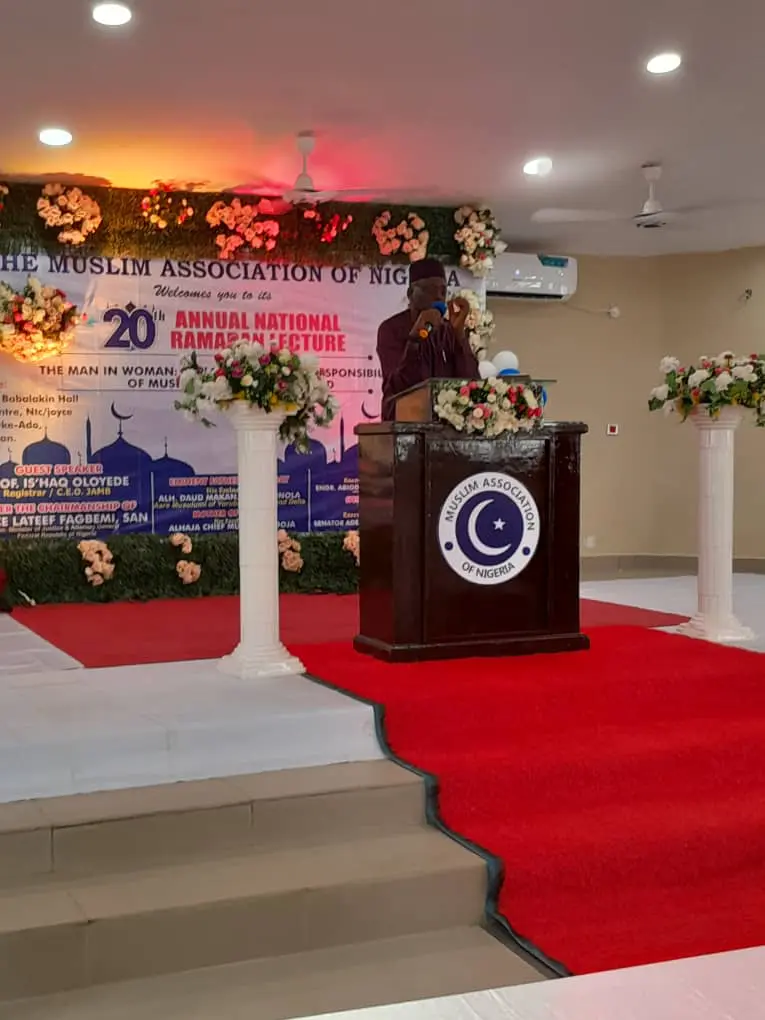
The Registrar, Joint Admissions and Matriculation Board (JAMB), Professor Is’haq Oloyede, has advised Muslim men to treat their wives the same way they treat themselves. Oloyede enjoined Muslim men to treat their wives as equals, with respect, kindness and fairness. The former Vice Chancellor, University of Ilorin spoke while delivering this year’s National Ramadan Lecture…
-

A perfect triangle, described by mathematicians, would be an example of a description of the form or idea. Plato believed that those forms occur in a mental state, liberated from human minds. He believed that consistent knowledge existed among individuals who could realize truths beyond the world of ordinary experience. Those individuals must go through…
-
According to Fallah et al. [34], idealists consider the human mind as the major substance for understanding the world. Ideals form the vital aim of life and education, connecting conception and schema through the mind [35]. In terms of understanding, the senses are as important as the mind [34]. The idealists’ beliefs indicate that schools…
-

In a learning study project, teachers are usually involved in all stages of the research process: in planning of lessons in the iterative form of the learning study, in the analysis of the pre-test and post-test of collected data, in the final stage of the experimental phase of the research process and in disseminating results…
-

School functions Idealist philosophers, such as Plato, Augustine, Descartes, Berkeley, Hume, Kant, Hegel, and Royce had a tremendous impact on the notion of schools as a means of promoting knowledge and preserving social norms and values [14]. School functions are based on idealistic educational beliefs about observing schools as miniature societies that must provide students…
-

Parental involvement has been a top priority for school leaders for decades, and research shows that it can make a major difference in student outcomes. But a parents’ rights movement that has captured headlines over the past few years and become a major political force has painted a particular picture of what parents’ involvement in their children’s…
-
There is no definitive answer to this question as it depends on the individual’s personal definition of the word “doctor.” Some people might say that you can call yourself a doctor with an honorary PhD if you have earned a doctorate degree from an accredited institution, regardless of whether or not the degree is honorary. Others might…
-

2.1. Theoretical Framework Capital structure hypothesis initially started at the end of 1950s; the first theory was the irrelevance theory developed by [8], well known as the Modigliani–Miller (MM) theory. According to this concept, there is no ideal capital structure for companies [9,12]. After some revision, Modigliani and Miller proposed a trade-off model based on…
-
Sociocultural Theory The work of Lev Vygotsky (1934, 1978) has become the foundation of much research and theory in cognitive development over the past several decades, particularly what has become known as sociocultural theory. Vygotsky’s theory comprises concepts such as culture-specific tools, private speech, and the zone of proximal development. Vygotsky believed cognitive development is…
-
On the penultimate day of SHAPE Education: The Future of Schools, educational technology took centre stage. Mario Barosevcic, Nik Peachy, Gisella Langé, and Jason Tan gave talks and discussed the role they see technology playing in education by 2040. The talks and conversations covered a wide range of topics including: the pedagogy in educational technology,…
-

Khandelwal et al. (2022), in “Breaking out of your comfort zone: archival research on epistemology in inclusive education pedagogy for Industry 4.0”, emphasized on inclusive pedagogies to ensure students meet the technological needs of Industry 4.0. They stated that Industry 4.0 is more technology-oriented and needs people skilled in technologies to give equal opportunities to all, even the…
-

“Disability is one of the most serious barriers to education across the globe” – UNICEF (https://www.unicef.org/) Introduction With each passing day, the composition of students in higher education institutions is becoming diverse (Fabricius et al., 2017). Students from various socio-economic backgrounds, physical disabilities and ethnicity are joining mainstream education (Betancourt et al., 2000; Burkhardt and Bennett, 2015). Based on UNICEF…
-

Newly-qualified teachers are planning to quit the UK to teach abroad because of abject pay and conditions in schools at home, new evidence has revealed. Teacher-training courses across the country are warning of a rise in the number of trainees opting for international posts for their first job, attracted by higher salaries, more respect in and…
-

Abstract Purpose This paper seeks to redress the lack of academic attention being given to the relationship between academia and industry in the competitive environment of international higher education‐related service delivery and use. It adopts a relational marketing approach to value creation in service interactions and explores the expectations and perceptions of employers and university…
You must be logged in to post a comment.